
| Online ISSN | : | |
| Print ISSN | : | 1829-4340 |
About the Journal
Journal of Oriental Studies has been published since 2006.
Journal is the successor of the "Problems of Oriental Studies", proceedings of the interuniversity scholarly articles and "Oriental Collection" (2004) published by the Ministry of Higher and Vocational Secondary Education of the Armenian SSR (1983-2004).
JOS is an interdisciplinary and interregional academic journal edited by the Faculty of Oriental Studies of YSU.
Announcements
Current Issue
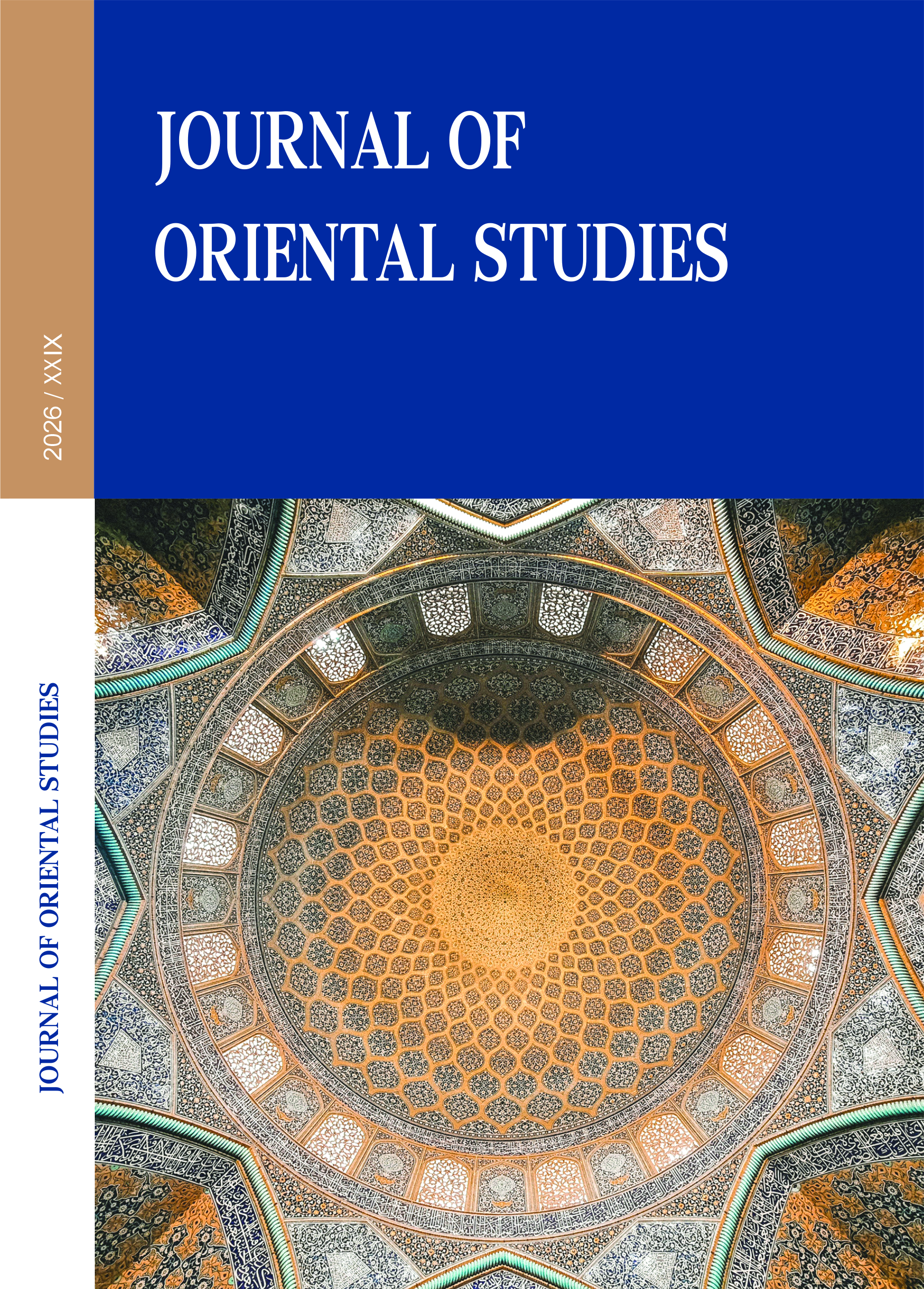
Vol. 29 No. 1 (2026): Journal of Oriental Studies
Articles
-
Articles
THE TEACHER–AI–STUDENT MODEL IN ESP AND AFL CLASSROOMS: A COMPARATIVE STUDY OF READING COMPREHENSION AT YEREVAN STATE UNIVERSITY
AbstractThis study investigates the pedagogical implications of supervised artificial intelligence use on reading comprehension development within English for Specific Purposes and Arabic as a Foreign Language courses at Yerevan State University. Drawing on structural-typological distinctions between the two language systems, the paper addresses whether digitally mediated support enhances textual understanding without compromising learners' autonomous processing capacities.
A mixed-methods comparative design was employed, using an adapted UNESCO text on the Silk Roads as the primary instrument. The study involved two groups of 20 students each, with asymmetric proficiency levels, and analysed data through a quantitative comparison of comprehension task accuracy before and after AI use, alongside thematic coding of qualitative student reflections. Participants completed a staged sequence of tasks encompassing individual reading, comprehension assessment, difficulty reflection, AI-assisted review, and evaluative feedback. Findings indicate that while both cohorts engaged productively with digital tools, their patterns of use diverged considerably. ESP learners drew upon AI assistance chiefly for semantic clarification and conceptual interpretation, whereas AFL learners relied upon it predominantly for morphological analysis, diacritical vocalisation (tashkīl), and the resolution of script-induced structural ambiguities.
The study argues that AI functions most effectively as a didactic instrument when sustained teacher guidance remains central to the learning process. The proposed Teacher-AI-Student model offers a methodologically grounded framework for language instruction in higher education, one that cultivates critical engagement with texts while guarding against uncritical dependence on automated tools.
References1. Alhaqbani, A., and M. Riazi. 2012. "Metacognitive Awareness of Reading Strategy Use in Arabic as a Second Language." Reading in a Foreign Language 24, no. 2: 231–255. https://nflrc.hawaii.edu/rfl/-October2012/¬articles/alhaqbani.pdf.
2. An, S. 2013. "Schema Theory in Reading." Theory and Practice in Language Studies 3, no. 1: 130–134. https://doi.org/10.4304/tpls.3.1.130-134.
3. Dickins, J. 2020. Thematic Structure and Para-Syntax: Arabic as a Case Study. London: Routledge. https://doi.org/10.4324/9780429351150.
4. Ferguson, C. A. 1959. "Diglossia." Word 15, no. 2: 325–340.
5. Grellet, F. 1981. Developing Reading Skills: A Practical Guide to Reading Comprehension Exercises. Cambridge: Cambridge University Press.
6. Hogan, M. J. 2004. Review of Assessing Reading, by J. C. Alderson. Reading in a Foreign Language 16, no. 1. http://nflrc.hawaii.edu/rfl/April2004/reviews/hogan.pdf.
7. Holmes, W., and A. Littlejohn. 2024. "Artificial Intelligence for Professional Learning." In Global Encyclopedia of Public Administration, Public Policy, and Governance, edited by A. Farazmand, 191–211. Cheltenham: Edward Elgar Publishing. https://doi.org/10.4337/-9781800889972.00018.
8. Ridge, E. 2008. Review of Insights into Second Language Reading: A Cross-Linguistic Approach, by K. Koda. Per Linguam 24, no. 2: 88–92. https://doi.org/10.5785/24-2-46.
9. Sultan, Y., G. Dautova, and J. Dalle. 2025. "Examining the Relationship Among Artificial Intelligence Literacy, Cultural Literacy, and Intercultural Communication Proficiency of Philology Students." Journal of Ethnic and Cultural Studies 12, no. 5: 345–362. https://doi.org/10.29333/ejecs/2839.
10. UNESCO. n.d. "About the Silk Roads." Silk Roads Programme. Accessed April 18, 2026. https://en.unesco.org/silkroad/about-silk-roads.
11. Wu, J. R. W. 2014. Validating Second Language Reading Examinations: Establishing the Validity of the GEPT Through Alignment with the Common European Framework of Reference. Studies in Language Testing, vol. 41. Cambridge: Cambridge University Press.
12. Zawacki-Richter, O., V. I. Marín, M. Bond, and F. Gouverneur. 2019. "Systematic Review of Research on Artificial Intelligence Applications in Higher Education—Where Are the Educators?" International Journal of Educational Technology in Higher Education 16, article 39. https://doi.org/10.1186/s41239-019-0171-0.
-
Articles
HANBALI CRITICISM OF AL-RAFIḊA IN IBN AL-JAWZĪ’S TALBĪS IBLĪS (THE DEVIL’S DECEIT)
AbstractThe treatise “Talbīs Iblīs” (The Devil’s Deceit) by Ibn al-Jawzi (1116-1201), a representative of the Hanbali religious jurisprudence of Sunni Islam, exemplifies the mapping of religious and intellectual contradictions in 12th-century Baghdad. During this period, in the intellectual environment of the city, various Shiite (al-rāfiḍa) movements maintained their activity alongside the four Sunni religious and legal schools, theological directions, and the gradually strengthening presence of Sufis in the public sphere. The competition between the mentioned religious and ideological groups, as well as political developments, is inevitably reflected in the works of Ibn al-Jawzi, a preacher involved in court life. The aim of the article is to examine Ibn al-Jawzi’s approaches to Shiite circles (al-Rāfiḍa) through an analysis of relevant sections of Talbīs Iblīs. By situating Ibn al-Jawzi within the religious and political developments of 12th-century Baghdad, the article demonstrates his fundamental criticism of the Shiites at both ideological and practical levels.
References1. Al-Azmeh, Aziz. 1988. "Orthodoxy and Hanbalite Fideism." Arabica 35, no. 3: 253–266.
2. Atta, Muhammad. 2020. "The Public Sphere during the Later Abbasid Caliphate (1000-1258 CE): The Role of Sufism." PhD diss., University of Leeds.
3. Liew, Han Hsien. 2018. "Piety, Knowledge, and Rulership in Medieval Islam: Ibn al-Jawzī's Ameliorative Politics." PhD diss., Harvard University.
4. Held, Pascal. 2022. "Ibn al-Jawzī’s Critique of Sufism in Talbīs Iblīs: A Re-Examination." Studia Islamica 117, no. 1: 88–126. https://doi.org/10.1163/19585705-12341440.
5. Ibn al-Jawzī, Abū ʿl-Faraj ʿAbd al-Raḥmān. 1982. Talbīs Iblīs. Beirut: Dār al-Qalam.
6. Kohlberg, Etan. 1995. "Rāfiḍa." In The Encyclopaedia of Islam, Vol. 8, 386–389. New ed. Leiden: E. J. Brill.
7. Kohlberg, Etan. 1979. "The Term 'Rāfiḍa' in Imami Shii Usage." Journal of the American Oriental Society 99, no. 4: 677–679.
8. Makdisi, George. 1981. The Rise of Colleges: Institutions of Learning in Islam and the West. Edinburgh: Edinburgh University Press.
9. Makdisi, George. 1970. "The Hanbali School and Sufism." Biblos (Coimbra) 46: 80–83.
10. Mason, Herbert. 1972. Two Statesmen of Medieval Islam: Vizir Ibn Hubayra and Caliph an-Nāṣir li Dīn Allāh. The Hague: Mouton.
11. Swartz, Merlin. 2002. A Medieval Critique of Anthropomorphism: Ibn al-Jawzī’s Kitāb Akhbār aṣ-Ṣifāt: A Critical Edition of the Arabic Text with Translation, Introduction and Notes. Leiden: Brill.
12. Tritton, A. S. 1947. Muslim Theology. James G. Forlong Fund, vol. 23. London: Published for the Royal Asiatic Society by Luzac & Co.
13. Van Ess, Josef. 2011. Der Eine und das Andere: Beobachtungen an islamischen häresiographischen Texten. Berlin: De Gruyter.
14. Watt, Montgomery. 1963. "The Rāfiḍites: A Preliminary Study." Oriens 16: 110–121.
15. Knysh, Aleksandr. 1985. "Hanbalitskaja kritika sufizma (po materialam «Talbis Iblis» Ibn al-Dzhauzi)." Pis'mennye pamjatniki i problemy istorii kul'tury narodov Vostoka 18: 170-175.
16. Mihajlova, I. B. 1990. Srednevekovyj Bagdad (nekotorye aspekty social'noj i politicheskoj istorii goroda v seredine X - seredine XIII v.). Moskva: Nauka.
-
Articles
IBN AL-JAWZĪ’S CRITIQUE OF SUFI DHIKR, SAMĀʿ, AND RITUAL CHANTING IN TALBĪS IBLĪS
AbstractIbn Al-Jawzi's work “Talbīs Iblīs” (“The Deception of Satan”) is a significant source for understanding of the attitude of orthodox Islam, particularly the Hanbali school, towards Sufi philosophy, ecstatic practice and all kinds of religious innovations (bidʿa) in Islam. This article presents the theses of the author in the chapter entitled “The Deception of Satan During Meditation, Dance and Ecstasy”, examines and classifies them. We aimed to point out the contradictions in the work, and the logical chain of citations of sources. In addition, elements of discourse analysis are applied to understand how the author uses authoritative sources - Sunnah, hadiths, quotes from famous theologians - to defend his position. As well as to analyze how he presents these hypotheses and views, confirming or denying them. The article also analyzes the criteria according to which Ibn al-Jawzī classifies singing and ritual chanting as either permissible or impermissible. Although Talbīs Iblīs has served an important source for a numerous scholars revious studies have mainly focused on presenting the general ideas and concepts of the work. The emphasis has mainly been placed on presenting the Hanbali school's position toward Sufism, based on the mentioned work. This article attempts to provide a more detailed examination of those sections of Talbīs Iblīs that explicitly address Sufi samāʿ and other forms of ritual chanting, with the aim of analyzing Ibn al-Jawzī’s arguments and the conclusions he reaches concerning these practices.
References1. Ahmed, Shahab. 2016. What Is Islam? The Importance of Being Islamic. Princeton: Princeton University Press.
2. Al-Anbārī. 1998. The History of al-Ṭabarī. Vol. 39. Albany: State University of New York Press.
3. Baldick, Julian. 2000. Mystical Islam: An Introduction to Sufism. London: I.B. Tauris.
4. Campo, Juan E., ed. 2009. Encyclopedia of Islam. Entry: "Abd al-Jabbār." New York: Facts on File.
5. Ernst, Carl W. 2011. Sufism: An Introduction to Islam. Chapel Hill: University of North Carolina Press.
6. Farmer, Henry George. 1929. A History of Arabian Music to the XIIIth Century. London: Luzac & Co.
7. Fedorova, E. S. 2014. "Muzyka v sufiĭskoĭ ritualʹnoĭ praktike" [Music in Sufi ritual practice]. Islamovedenie, no. 3: 65–66.
8. Gambari, Y. D., and K. Fatiu. 2023. "A Critique of Ibn al-Jawzī’s Discourse on Some Sufi Themes in His Talbīs Iblīs." Al-Wijdān: Journal of Islamic Education Studies 8, no. 4: 600–621.
9. Goldziher, Ignác. 1981. Introduction to Islamic Theology and Law. Princeton: Princeton University Press.
10. Houtsma, M., T. W. Arnold, and H. A. R. Gibb et al., eds. 1993. First Encyclopaedia of Islam, 1913–1936. Vol. 8, Ṭāʾif–Zurkhāna. Leiden: E. J. Brill.
11. Ibn al-Jawzī. 1968. Talbīs Iblīs. Cairo: Dār al-Kutub al-ʿIlmīyah.
12. Karamustafa, Ahmet T. 2007. Sufism: The Formative Period. Berkeley: University of California Press.
13. Keck, Egbert. 1990. Living Waters: Scandinavian Orientalistic Studies. Copenhagen: Museum Tusculanum Press.
14. Knysh, Alexander D. 1985. "Khanbalitskaia kritika sufizma (po materialam Talbīs Iblīs Ibn al-Jawzī)" [Hanbalite critique of Sufism (based on Ibn al-Jawzī’s Talbīs Iblīs)]. Moscow.
15. Makdisi, George. 1974. "The Hanbali School and Sufism." Humaniora Islamica 2: 61–63.
16. Melchert, Christopher. 2006. The Formation of the Sunni Schools of Law, 9th–10th Centuries C.E. Leiden: Brill.
17. Prozorov, S. M. 1994. Khrestomatiia po islamu [Reader on Islam]. Vol. 1. Moscow: Vostochnaia Literatura.
18. Shamilli, G. B. 2009. "K istorii zarozhdeniia muzykalʹnoĭ kulʹtury islamskoĭ tsivilizatsii (610–611 gody)" [On the history of the emergence of the musical culture of Islamic civilization (610–611)]. Vestnik ChGU, no. 10: 179–183.
19. Shehadi, Fadlou. 1995. Philosophies of Music in Medieval Islam. Leiden: Brill.
20. Trimingham, J. Spencer. 1989. Sufizm v kontekste musulʹmanskoĭ kulʹtury [Sufism in the context of Muslim culture]. Moscow: Nauka.
-
Articles
THE CRIMINALIZATION OF LÈSE-MAJESTÉ IN TURKEY AS A LEGAL INSTRUMENT FOR THE INSTITUTIONALIZATION OF REPRESSION AND CENTRALIZATION OF POWER: THE PRICE OF QUESTIONING THE UNQUESTIONABLE
AbstractThis article examines the normative content and practical application of Article 299 of the Penal Code of the Republic of Turkey, contextualizing them within the framework of authoritarian transformations and the centralization of power. Employing historical-legal and comparative methods, the study demonstrates that the criminalization of insulting the head of state in Turkey has evolved into a legal mechanism for the "sacralization" of the presidential institution and the legitimation of one-man rule. The unprecedented surge in criminal proceedings initiated and convictions handed down during R. T. Erdoğan’s presidency demonstrates the systemic abuse of this legal norm. Furthermore, by analyzing the contradictions between the rulings of the Constitutional Court of Turkey, the case law of the European Court of Human Rights (ECtHR), and the standards of the Venice Commission, the article emphasizes that Article 299 has transcended the classical legal boundaries of protecting personal honor and dignity, functioning in practice as an institutional lever for the suppression of political opposition and freedom of speech.
References1. 1876 Kânûn-ı Esâsî. https://www.anayasa.gov.tr/tr/mevzuat/¬on-ceki-anayasalar/1876-k%C3%A2n%C3%BBn-i-es%C3%A2s%C3%AE/.
2. Anayasa Mahkemesi Kararı (Turkish Constitutional Court Decision). 2016. E. 2016/186. https://normkararlarbilgibankasi.¬anayasa.-gov.tr/¬Dosyalar/Kararlar/KararPDF/2016-186-nrm.pdf.
3. Brady, K. 2016. "German Court Justifies Injunction on Erdogan Poem." Deutsche Welle (DW). https://www.dw.com/en/german-court-justifies-injunction-on-b%C3%B6hmermanns-satirical-erdogan-poem/a-19339387.
4. Çetin, Neslihan. 2022. "Le délit d’offense au président de la République: sacralisation du chef de l’État turc et utilisation abusive d’une disposition inconstitutionnelle." Jus Politicum Blog. https://blog.juspoliticum.com/2022/02/08/le-delit-doffense-au-president-de-la-republique-sacralisation-du-chef-de-letat-turc-et-utilisation-abusive-dune-disposition-inconstitutionnelle-par-neslihan-cetin/#_ftnref6.
5. CNN Türk. 2016. "Anasınıfı öğretmeni Cumhurbaşkanı Erdoğan'a hakaret ettiği iddiasıyla görevden alındı." March 24, 2016. https://www.cnnturk.com/turkiye/anasinifi-ogretmeni-cumhurbaskani-erdogana-hakaret-ettigi-iddiasiyla-gorevden-alindi-1488026.
6. Council of Europe. 2017. Protecting the Right to Freedom of Expression under the European Convention on Human Rights: A Handbook for Legal Practitioners. Strasbourg: Council of Europe.
7. Demir, Ö. 2018. "Yeni Rejimde Cumhurbaşkanına Hakaret Suçuna Yönelik Eleştirel Bir İnceleme." Suç ve Ceza, no. 3.
8. Deutsche Welle (DW). 2018. "Hakaret davalarında rekor artış." https://www.dw.com/tr/cumhurba%C5%9Fkan%C4%B1na-hakaret-davalar%C4%B1nda-rekor-art%C4%B1%C5%9F/a-46622702.
9. Die Gaste. 2016. "Lèse-majesté (Majestätsbeleidigung) Krizi." no. 41 (Nisan–Haziran).
10. Die Zeit. 2016. "Recep Tayyip Erdoğan: Davalı halk." Zeit Magazin. https://www.zeit.de/zeit-magazin/leben/2016-07/tuerkiye-recep-tayyip-erdogan-hakaret-dava.
11. Doğruluk Payı. 2021. "Cumhurbaşkanına Hakaret Kanunu." https://www.dogrulukpayi.com/bulten/cumhurbaskanina-hakaret-kanunu.
12. Dülger, R. 2017. "Vatana İhanet Suçunun Kökenleri Üzerine Bir İncelme." Marmara Üniversitesi Hukuk Fakültesi Hukuk Araştırmaları Dergisi (MÜHF - HAD) 23, no. 2.
13. ECHR Case Law. 2021. "Erdogan Portrayed as Bush’s Dog in a Collage at a Public Exhibition: Violation of Freedom of Expression." https://www.echrcaselaw.com/en/echr-decisions/erdogan-as-bushs-dog-in-a-collage-at-a-public-exhibition-arrest-pre-trial-detention-and-conviction-of-the-artist-violation-of-freedom-of-expression/.
14. Erem, Faruk. 1991. "Cumhurbaşkanına Hakaret." Türkiye Barolar Birliği Dergisi, no. 1: 13.
15. European Court of Human Rights (ECHR). 1986. Lingens v. Austria. Application no. 9815/82, para. 42. https://hudoc.echr.coe.int/-fre?itemid=001-57523.
16. Evrensel. 2018. "Erdoğan'ı Gollum'a benzeten Doktor Çiftçi görevine dönecek." https://www.evrensel.net/haber/356120/erdogani-golluma-benzeten-doktor-ciftci-gorevine-donecek.
17. Fikret, İlkiz. 2015. "Cumhurbaşkanına Hakaret ve 299 Zamanı." Bianet. https://bianet.org/yazi/cumhurbaskanina-hakaret-and-299-zamani-161147.
18. Haber7. 2016. "Zeynep Balıkçıoğlu kovuldu." https://m.haber7.com/¬¬¬guncel/haber/2001922-zeynep-sayin-balikcioglu-kovuldu.
19. Hürriyet. 2024. "Dilruba’ya 350 gün hapis." September 3, 2024. https://www.hurriyet.com.tr/gundem/dilrubaya-350-gun-hapis-42577180.
20. İlkiz, Fikret. 2022. AİHM, AYM ve Yargıtay Kararları Işığında Cumhurbaşkanına Hakaret Suçu: Vedat Şorli v. Türkiye Kararı. Ankara.
21. İnce, Ali Hikmet. 2014. "İsmet Paşa’nın Elini Öpen TİP Lideri." http://www.alihikmetince.com/haber/ismet-pasa-nin-elini-open-tip-lideri-401.
22. Işık, T. 2022. "Cumhurbaşkanına Hakaret Suçu ve İfade Özgürlüğü." Yeditepe Üniversitesi Hukuk Fakültesi Dergisi 19, no. 2.
23. Kurtul, Alper. 2020. "Lèse-Majesté and Journalism in Turkey and Europe." In Journalist Safety and Self-Censorship. London: Routledge.
24. Kurtul, Alper. 2022. "A Ghost that Haunts European Democracies." Verfassungsblog. https://verfassungsblog.de/a-ghost-that-haunts-european-democracies/.
25. Önderoğlu, Erol. 2015. "Erdoğan'dan Haberciye İki Seçenek: Hapis ve Para." Bianet. https://bianet.org/haber/erdogan-dan-haberciye-iki-secenek-hapis-ve-para-165934.
26. Oran, Baskın. 2024. "Olağanüstü arızalı bir iktidar." Agos. https://www.agos.com.tr/tr/yazi/30787/olaganustu-arizali-bir-iktidar.
27. Över, Defne, and İpek Tuncer-Ebetürk. 2022. "Insult, Charisma, and Legitimacy: Turkey’s Transition to Personalist Rule." Social & Legal Studies 31, no. 5.
28. Şen, Ersan. 2021. "Cumhurbaşkanına Hakaret Suçu." Hukuki Haber. https://www.hukukihaber.net/cumhurbaskanina-hakaret-sucu.
29. Sınar, Hamide. 2015. "Cumhurbaşkanına Hakaret ve Devletin Egemenlik Alametlerini Aşağılama Suçları." Ceza Hukuku Dergisi 10, no. 27.
30. Şirin, Tolga. 2016. "“Majestelerini incitme” suçu." T24. https://t24.com.tr/yazarlar/tolga-sirin/majestelerini-incitme-sucu,32943.
31. Türkiye Cumhuriyeti. 2004. Türk Ceza Kanunu (Turkish Penal Code). Law No. 5237. https://www.mevzuat.gov.tr/mevzuatmetin/-1.5.5237.pdf.
32. Venice Commission (European Commission for Democracy Through Law). 2016. Opinion on Articles 216, 299, 301 and 314 of the Penal Code of Turkey. CDL-AD(2016)002. Strasbourg: Council of Europe.
-
Articles
BETWEEN VERNACULAR PRACTICE AND STANDARDIZATION OF KNOWLEDGE: MARINE ANIMAL TERMINOLOGY IN A NINETEENTH-CENTURY QUADRILINGUAL ARMENO-TURKISH DICTIONAR
AbstractThis article examines marine animal terminology in a nineteenth-century quadrilingual Armeno-Turkish medical dictionary (MS 10782, Matenadaran), with a focus on the processes through which scientific and vernacular knowledge were transmitted and adapted in a multilingual Ottoman context. Drawing on a series of lexicographic case studies, the study demonstrates that the terminology of marine species reflects a transitional stage between vernacular naming practices and emerging terminological standardization. The analysis shows that transcription functioned as a central mediating strategy, enabling the phonetic adaptation of Latin learned terms into Armenian-script Turkish (e.g., Mugil / Mujil, Cyprinus / Ch’ibrinus). However, transcription operated alongside other mechanisms, including semantic translation, metaphorical naming, functional classification through “umbrella terms,” and intralingual explanation. These strategies often resulted in taxonomic instability, cross-species equivalence, and the coexistence of multiple naming systems derived from Greek, Latin, Italian, and Turkic sources. The findings highlight the absence of strict one-to-one equivalence in nineteenth-century zoological terminology and demonstrate how knowledge was actively mediated through a combination of linguistic and conceptual strategies. A diachronic perspective further reveals that while some terms persisted into modern Turkish, others underwent semantic shift or disappeared, reflecting the gradual standardization of scientific vocabulary. By situating these processes within the broader framework of multilingual lexicographic practice, the article argues that Armeno-Turkish functioned as a crucial medium for the transmission, localization, and transformation of scientific knowledge in the Ottoman Empire.
References1. Acharian, Hrachia. 1973. Hayeren armatakan bararan [Etymological dictionary of the Armenian language]. Vol. 2. Yerevan: Academy of Sciences of the Armenian SSR.
2. Anderson, F. E. 2000. "Phylogenetic Relationships among Loliginid Squids (Cephalopoda: Myopsida) Based on Analyses of Multiple Data Sets." Zoological Journal of the Linnean Society 130, no. 4: 603–633.
3. Beekes, Robert. 2010. Etymological Dictionary of Greek. Vol. 1. Leiden: Brill.
4. Besli, Ertan. 2010. "Eski ve Orta Türkçe Hayvan İsimlerinin Etimolojisi." PhD diss., Istanbul University.
5. Chrone-Vakalopoulos, Maria. 2008. "Fishes and Other Aquatic Species in Byzantine Literature: Classification, Terminology and Scientific Names." Byzantina Symmeikta 18: 123–157.
6. Deveciyan, Karekin. 1915. Pêche et Pêcheries en Turquie. Constantinople: Imprimerie de l’Administration de la Dette Publique Ottomane.
7. Ernout, Alfred, and Antoine Meillet. 2001. Dictionnaire étymologique de la langue latine. Paris: Klincksieck.
8. Ganias, Konstantinos, C. Mezarli, and E. Voultsiadou. 2017. "Aristotle as an Ichthyologist: Exploring Aegean Fish Diversity 2,400 Years Ago." Fish and Fisheries 18, no. 6: 1038–1055.
9. Istituto della Enciclopedia Italiana Treccani. 2026. "Treccani." Accessed May 3, 2026. https://www.treccani.it.
10. Jahukyan, Gevorg. 1978. Hayren stugabanakan bararan [Etymological dictionary of the Armenian language]. Yerevan: Academy of Sciences of the Armenian SSR.
11. Liddell, Henry George, Robert Scott, and Henry Stuart Jones. 1996. A Greek–English Lexicon. Rev. ed. Oxford: Clarendon Press.
12. Linnaeus, Carl. 1758. Systema Naturae. 10th ed. Stockholm.
13. Matenadaran (Mesrop Mashtots Institute of Ancient Manuscripts). n.d. MS 10782.
14. National Institutes of Health. 2012. "Sir Charles Locock and Potassium Bromide." PubMed. Accessed May 3, 2026. https://pubmed.ncbi.nlm.nih.gov/22953325/.
15. Nişanyan, Sevan. 2026. Nişanyan Sözlük: Çağdaş Türkçenin Etimolojisi. Accessed April 14, 2026. https://www.nisanyansozluk.com.
16. Roper, C. F. E., and C. C. Lu. 1990. Comparative Morphology and Function of Dermal Structures in Oceanic Squids. Smithsonian Contributions to Zoology, no. 493. Washington, DC: Smithsonian Institution Press.
17. Solopov, V. A. 2008. "Etimologiya novolatinskogo ikhtionima Acerina ‘yorsh’" [The etymology of the Neo-Latin ichthyonym Acerina (‘ruffe’)]. Schole 2: 63–70.
18. Svanberg, Ingvar, and Alison Locker. 2020. "Ethnoichthyology of Freshwater Fish in Europe." Journal of Ethnobiology and Ethnomedicine 16, no. 1: 3–29.
19. Thompson, D’Arcy Wentworth. 1928. "On Egyptian Fish-Names Used by Greek Writers." Journal of Egyptian Archaeology 14, no. 1/2: 22–41.
20. Türk Dil Kurumu. 2026. Türkçe Sözlük. Accessed May 3, 2026. https://sozluk.gov.tr.
21. Vefik Paşa, Aḥmed. 1876. Lehce-i ʿOsmānī. Istanbul: Maṭbaʿa-yı ʿĀmire.
22. Vergados, Athanassios. 2021. "Etymological Explanations of Fish Names in Oppian’s Halieutica." In Ancient and Medieval Greek Etymology, 179–221. Leiden: Brill.
23. Wermuth, Maria-Cornelia, and Heidi Verplaetse. 2019. "Medical Terminology in the Western World: Current Situation." In Handbook of Terminology, Volume 2, edited by Abied Alsulaiman and Ahmed Allaithy, 83–115. Amsterdam: John Benjamins.
24. World Register of Marine Species (WoRMS). 2026. Dasyatis pastinaca (Linnaeus, 1758). Accessed March 24, 2026. https://www.marinespecies.org.
-
Articles
SOMATIC PHRASEOLOGY IN THE CONTEXT OF LANGUAGE CONTACTS: A COMPARATIVE ANALYSIS OF AZERBAIJANI AND ARMENIAN IDIOMS WITH THE COMPONENT BAŠ
AbstractThe purpose of this article is to present phraseological expressions as an integral and distinctive part of every language, demonstrating the peculiarities of their usage across different layers of the language. As in any language, in Azerbaijani as well, idioms endow the language with a unique vitality and expressiveness, while simultaneously encapsulating the ethnolinguistic realities, national linguistic worldview, traditions, and customs of the people. By analyzing the structural, semantic, and stylistic characteristics of idioms, the study highlights their role in reflecting a nation's ethno-linguistic consciousness, historical evolution, and socio-cultural interactions. The research also focuses on the semantic classification of idioms—categorizing them into groups. The study includes an appendix featuring Azerbaijani phraseological units formed with the word "baş" (head), provided with literal translations and their corresponding Armenian equivalents. The study concludes that phraseology remains a dynamic, living layer of language that continuously adapts to social and communicative shifts.
References1. Abełyan, M. 2016. Erker [Works]. Vol. Ž (10). Yerevan: YSU Publishing House.
2. Ähmädova, S. 2020. "Frazeoloji vahidlärïn äsas xüsusiyyätlärï vä mäna növlärï" [Main characteristics and semantic types of phraseological units]. Tädqïqlär [Researches], nos. 1–2: 78–86.
3. Azärbaycan dilinïn izahlï lüğätï [Explanatory dictionary of the Azerbaijani language]. 2006. In 4 volumes. Bakï: Šärq-Qärb.
4. Bağïrov, N. 2022. "Türk dillärinïn somatik frazeologiyasï" [Somatic phraseology of Turkic languages]. Doctoral dissertation abstract (Avtoreferat), Elm, Bakï.
5. Bally, Ch. 1961. Frantsuzskaya stilistika [French stylistics]. Translated by K. A. Dolinina. Moscow: Izdatel'stvo Inostrannoy Literatury.
6. Baranov, A. N., and D. O. Dobrovol'skij. 2008. Aspekty teorii frazeologii [Aspects of the theory of phraseology]. Moscow: Znak.
7. Bayramov, H. 1978. Azärbaycan dili frazeologiyasïnïn äsaslarï [Fundamentals of Azerbaijani phraseology]. Bakï: Maarif.
8. Bediryan, P. S. 2011. Hayeren darjvack‘neri ěndardzak bararan [Comprehensive dictionary of Armenian idioms]. Yerevan: YSU Publishing House.
9. Berberyan, V. 2024. "Darjvack‘ayin vočagitut‘yan harc‘er (1950–2020)" [Issues of phraseological stylistics (1950–2020)]. Banasirut‘yan handes [Journal of Philology], no. 3: 112–125.
10. Hayrapetyan, L. U., ed. 2023. Darjvack‘abanut‘yun: Met‘odakan c‘uc‘umner [Phraseology: Methodological guidelines]. Yerevan: YSU Publishing House.
11. Hüseynov, M. 2013. Poetik frazeologiya [Poetic phraseology]. Bakï: Elm vä Tähsil.
12. Jahukyan, G. B., and F. L. Xlłat‘yan. 1976. Hayoc‘ lezu: Endhanur gitelik‘ner: Vočagitut‘yun [Armenian language: General knowledge: Stylistics]. Yerevan: Luys Publishing House.
13. Martirosyan, H. 2018. "The Armenian Dialects" (Chapter 2.2). In The Languages and Linguistics of Western Asia: An Areal Perspective, edited by G. Haig and G. Khan, 46–105. Berlin: De Gruyter Mouton.
14. Käsämänli, N. 1988. Hamïsï sevgidändïr [It is all because of love]. Bakï: Gänclik.
15. Xočumyan, B. 2019. Somatičeskie frazeologizmy (sopostavitel'noe opisanie russkikh i armyanskikh somaticheskikh frazeologizmov) [Somatic phraseological units (a comparative description of Russian and Armenian somatic idioms)]. Yerevan: YSU Publishing House.
16. Mirzäyev, E. 2023. "Frazeoloji birläšmälär, onlarïn tärjümäsï vä bu prosesdä yaranan čätinliklär" [Phraseological units, their translation and difficulties arising in this process]. Mütärcim, no. 2: 45–53.
17. Ragagnin, E. 2021. "Azeri." In The Turkic Languages (Routledge Language Family Series), edited by L. Johanson and É. A. Csató, 242–261. London: Routledge.
18. "Recommended Transcriptions and Notations." 2022. Turkic Languages 26, no. 2: 00i–00v. https://doi.org/10.13173/TL/2022/2/00i.
19. Šanskij, N. M. 1957. Leksika i frazeologiya sovremennogo russkogo yazyka [Lexics and phraseology of the modern Russian language]. Moscow: Gosudarstvennoe Uchebno-Pedagogicheskoe Izdatel'stvo.
20. Suk‘iasyan, A. M. 2004. Žamanakakic‘ hayoc‘ lezu [Contemporary Armenian language]. 4th ed. Yerevan: YSU Publishing House.
21. Suk‘iasyan, A. M., and S. A. Galstyan. 1975. Hayoc‘ lezvi darjvack‘abanakan bararan [Phraseological dictionary of the Armenian language]. Yerevan: YSU Publishing House.
22. Vəliyeva, N. 2006. Azərbaycanca-İngiliscə-Rusca frazeoloji lüğət [Azerbaijani-English-Russian phraseological dictionary]. Baku: Azərbaycan Dillər Universiteti.
23. Vinogradov, V. V. 1977. Izbrannye trudy. Leksikologiya i leksikografiya [Selected works. Lexicology and lexicography]. Moscow: Nauka.
24. Zeynalov, F., and S. Älizadä, eds. 1988. Kitabi-Dädä Qorqud [The Book of Dede Korkut]. Bakï: Yazïčï.
-
Articles
THE INFLUENCE OF THE 1993 COPENHAGEN AND 1999 HELSINKI SUMMITS ON TURKEY-EU RELATIONS
AbstractThe new geopolitical situation that arose as a result of the collapse of the bipolar world order led to significant changes in Turkey's foreign policy. On the one hand, the collapse of the USSR weakened Turkey's importance as the West's main partner on the southern borders of the USSR, on the other hand, the new geopolitical situation and the power vacuum in the region that arose as a result of the disappearance of the second pole created new opportunities for Turkey. It is no coincidence that in the late 1980s and early 1990s, unprecedented activity was recorded in Turkey to radically revise its domestic and foreign policies and attempt to implement them. Turning to Turkey-EU relations, it is worth noting that in parallel with the new directions of foreign policy, Turkey continued to maintain active relations with the Union in the 1990s, seeking to complete the long process of membership.
References1. Aksu, K. 2012. Turkey-EU Relations: Power, Politics and the Future. London: Cambridge Scholars Publishing.
2. Aybey, A. 2004. "Turkey and the European Union Relations: A Historical Assessment." Ankara Avrupa Çalışmaları Dergisi 4, no. 1: 19–38.
3. Baykal, S. 2002. "Turkey-EU Relations in the Aftermath of the Helsinki Summit." Ankara Review of European Studies 2, no. 3: 1–15.
4. Buhari, D. 2009. "Turkey-EU Relations: The Limitations of Europeanisation Studies." The Turkish Yearbook of International Relations 40: 91–121.
5. Hale, William. 2002. Turkish Foreign Policy, 1774–2000. London: Frank Cass.
6. Hatipoğlu, E. 2005. "The Turkish-EU Relationship in Historical Perspective." In Turkish-Israeli Relations in a Trans-Atlantic Context. Tel Aviv: Tel Aviv University.
7. Huntington, Samuel P. 1996. The Clash of Civilization and the Remaking of World Order. New York: Simon & Schuster.
8. Keyman, E. Fuat, and Senem Aydın. 2004. "European Integration and the Transformation of Turkish Democracy." EU-Turkey Working Papers, no. 2. Brussels: Center for European Policy Studies (CEPS). https://www.ceps.eu/ceps-publications/european-integration-and-transformation-turkish-democracy/.
9. Kirişci, Kemal. 2004. The Domestic Politics of Negotiating Pre-Accession. Bologna: University of Bologna.
10. Kochenov, Dimitry. 2008. EU Enlargement and the Failure of Conditionality. The Hague: Kluwer Law International.
11. Laçiner, Sedat. 2003–2004. "Ozalism (Neo-Ottomanism): An Alternative in Turkish Foreign Policy?" Journal of Administrative Sciences 1, nos. 1–2: 161–202.
12. Öniş, Ziya. 2003. "Domestic Politics, International Norms and Challenges to the State: Turkey-EU Relations in the Post-Helsinki Era." Turkish Studies 4, no. 1: 9–34.
13. Sönmezoğlu, Faruk. 2001. Türk Dış Politikasının Analizi. İstanbul: Der Yayınları.
14. Theophylactou, Demetrios A. 2012. "Geopolitics, Turkey’s EU Accession Course and Cyprus." Southeast European and Black Sea Studies 12, no. 1: 165–178.
15. Vardan, Ömer. 2009. "Turkey-EU Relations and Democracy in Turkey: Problems and Prospects." Turkish Policy Quarterly 8, no. 1: 35–43.
16. Yeşilada, Birol A. 2007. "Benefits of Turkey's EU Membership for Both Parties." In Benefits of Turkey’s EU Membership. Montreal: European Union Studies Association-Canada.
17. Shlykov, V. I. 2010. Vlijanie faktora peregovorov s ES na realizaciju reform v Turcii (1999–2009 gg.). Moskva: Institut vostokovedenija RAN (IV RAN).
18. European Economic Community. 1963. Ankara Agreement: Agreement Establishing an Association Between the European Economic Community and Turkey. Signed September 12, 1963. https://www.ab.gov.tr/files/ardb/evt/1_avrupa_birligi/1_2_temel_belgeler/1_2_1_ortaklik_anlasmasi/ankara_agreement_en.pdf.
19. EC-Turkey Association Council. 1995. Customs Union Decision: Decision No. 1/95 of the EC-Turkey Association Council on Implementing the Final Phase of the Customs Union. https://www.ab.gov.tr/-files/ardb/evt/EEC-Turkey_association_agreements_and_¬protocols_¬and_-other_basic_texts.pdf.
20. European Commission. 1998. Regular Report on Turkey’s Progress Towards Accession. Brussels. https://www.ab.gov.tr/files/-AB_Iliskileri/Tur_En_Realitons/Progress/Turkey_Progress_Report_1998.pdf.
21. European Council. 1993. Copenhagen Summit Presidency Conclusions. Copenhagen. https://www.europarl.europa.eu/enlargement/-ec/¬pdf/¬cop_en.pdf.
22. European Council. 1997. Luxembourg Summit Presidency Conclusions. Luxembourg. https://www.ab.gov.tr/files/ardb/evt/-1_avrupa_birligi/¬1_4_zirveler_1985_sonrasi/1997_12_luksemburg_-zirvesi_¬baskanlik_sonuc_bildirgesi_en.pdf.
23. European Council. 1999. Helsinki Summit Presidency Conclusions. Helsinki. http://www.europarl.europa.eu/summits/hel1_en.htm.
24. European Union. 1992. Treaty on European Union (Maastricht Treaty). Luxembourg: Office for Official Publications of the European Communities. https://europa.eu/european-union/sites/europaeu/files/docs/-body/¬treaty_on_european_union_en.pdf.
25. European Union Council. 2001. Council Decision of 12 March 2001 on the Principles, Priorities, Intermediate Objectives and Conditions Contained in the Accession Partnership with the Republic of Turkey (2001/235/EC). Official Journal of the European Communities. http://www.ab.gov.tr/files/AB_Iliskileri/Tur_En_Realitons/Apd/Turkey_APD_2001.pdf.
26. UNC European Union Center of Excellence (UNC EUCE). 2008. "Turkey’s Quest for EU Membership." EUCE Briefing Series. http://europe.unc.edu/wp-content/uploads/2013/08/Brief4-0803-turkeys-quest.pdf.
-
Articles
GEOPOLITICAL CHANGES IN THE MIDDLE EAST AND THE PERSIAN GULF FOLLOWING THE UNITED STATES–ISRAEL WAR AGAINST IRAN
AbstractThe United States–Israel war against Iran (the 12-Day War of February 2026) fundamentally altered the international and geopolitical landscape of the Middle East and the Persian Gulf region. Despite the significant damage inflicted on Iran, the military campaign failed to achieve one of its principal objectives—the overthrow of the Iranian political regime. The strategic calculations of the United States and Israel proved inaccurate, as they underestimated the considerable ideological resilience embedded within Iran’s political and state institutions, the core of which is constituted by Islamic ideology. Iran remains a major regional power owing to its extensive network of political and strategic influence across several Middle Eastern countries, including Gaza, Lebanon, Yemen, Iraq, and Syria. Consequently, any military confrontation with Iran could not be confined solely to Iranian territory but inevitably extended to a broader regional dimension involving multiple arenas of influence and proxy actors.
References1. Al Jazeera. 2025. "Mapping US Troops and Military Bases in the Middle East." June 12, 2025., www.aljazeera.com/news/2025/6/12/¬map-ping-us-t¬roops-and-military-bases-in-the-middle-east?utm
2. Al Jazeera English 2026, Iran war live: Tehran negotiators leave Switzerland as ‘hard work’ begins https://www.aljazeera.com/?utm
1. Press TV. 2024. "Iran’s Assembly of Experts Highlights Strengths of Islamic Democracy." May 21, 2024. https://www.presstv.ir/-Detail/2024/05/21/725951/Iran-Assembly-Experts-Islamic-democracy
2. The Guardian. 2026. "Ali Khamenei’s Son Mojtaba Chosen as Iran’s New Supreme Leader." March 8, 2026. https://www.theguar-dian.com/¬world/2026/mar/08/ali-khameneis-son-mojtaba-chosen-as-irans-new-supreme-leader?utm
3. U.S. Energy Information Administration (EIA). 2026. Today in Energy. Accessed June 22, 2026 https://www.eia.gov/todayinenergy/detail
4. GMA Network. 2024. "Iran Missile Attacks on Kuwait and Bahrain Fail as US Strikes Back: CENTCOM www.gmanetwork.com/news/¬topstories/¬world/990008/iran-missile-attacks-on-kuwait-and-bahrain-fail-as-us-strikes-back-centcom/story/
5. CBS News. 2017. "Trump Signs $110 Billion Arms Deal with Saudi Arabia." May 20, 2017. https://www.cbsnews.com/news/trump-signs-110-billion-arms-deal-with-saudi-arabia/?utm_source=chatgpt.com
6. Anadolu Ajansı. 2024. "Israel Says Türkiye Under President Erdogan Led Hostile Approach Against Tel Aviv.", https://www.aa.com.tr/¬en/¬middle-east/israel-says-turkiye-under-president-erdogan-led-hostile-approach-against-tel-aviv/
7. U.S. Energy Information Administration (EIA). 2019. "The Strait of Hormuz Is the World's Most Important Oil Chokepoint." Today in Energy. June 20, 2019., https://www.eia.gov/todayinenergy/¬detail.php?id=¬39932-&utm
